
 Save
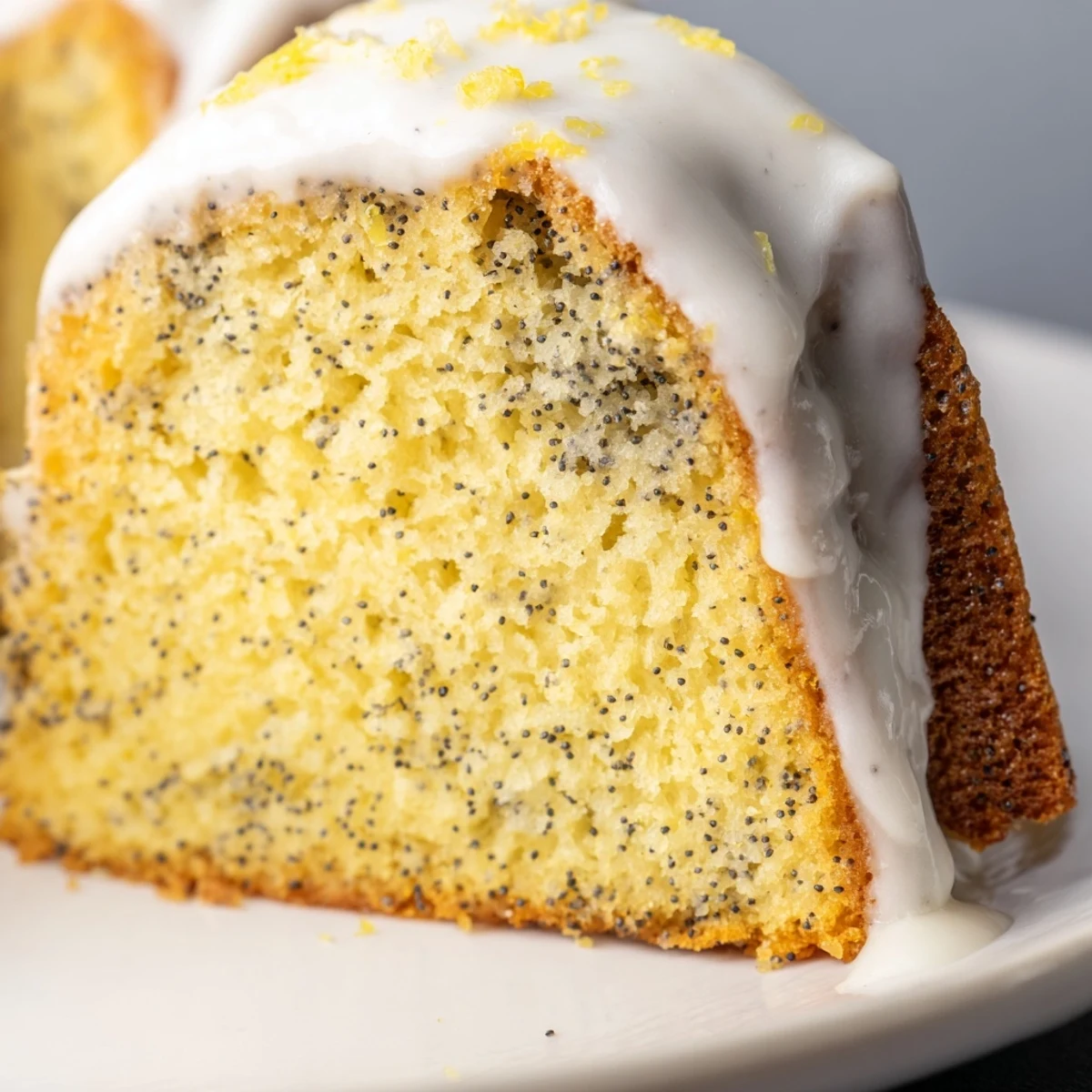
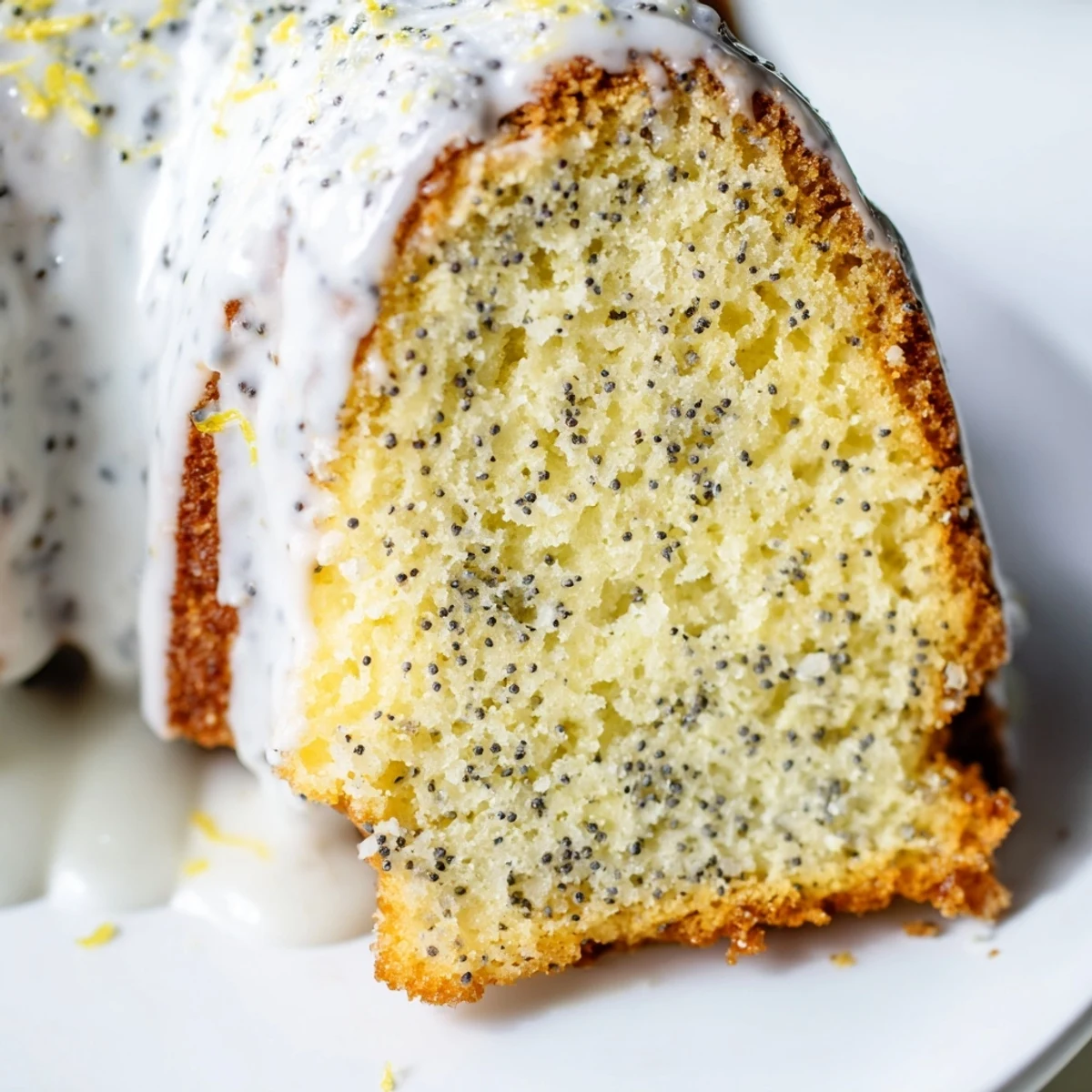
Save This moist and tender Bundt cake highlights bright lemon zest and juice, complemented by crunchy poppy seeds folded throughout. The batter combines flour, butter, sugar, eggs, and a touch of vanilla, creating a balanced texture. Baked until golden, the cake is finished with a smooth lemon glaze that adds a fresh, tangy layer. Serve this delightful cake for brunch or a refreshing dessert that pairs wonderfully with tea or sparkling wine.
There was a Sunday morning when my neighbor brought over a slice of lemon poppy seed cake she'd picked up at a local bakery, and I remember thinking how unfair it was that something so bright and summery had to come from a store. The tang of lemon, the tender crumb, those little poppy seeds catching on my teeth—I decided right then I was going to figure out how to make it at home. Turns out, it's simpler than you'd think, and infinitely better when you know exactly what went into it.
I made this cake for a book club gathering last spring, and someone actually asked if I'd catered it. The afternoon light was streaming through the windows, and there was something about watching my friends dig into slices while we talked that made me realize this wasn't just a dessert—it was a moment. That glaze catching the light on the Bundt's ridges felt almost showstopping, which honestly surprised me considering how little fuss it requires.
Ingredients
- All-purpose flour: The foundation—you want it measured by weight if possible, but if you're using cups, spoon and level gently to avoid packing it down.
- Baking powder and baking soda: These two work together to give you that tender crumb, but don't be tempted to increase them thinking you'll get extra rise.
- Poppy seeds: Buy them from the spice aisle where there's higher turnover; stale poppy seeds taste flat and bitter.
- Unsalted butter and sugar: The creaming step is where the magic happens—those three to four minutes aren't negotiable if you want the right texture.
- Eggs at room temperature: Cold eggs won't incorporate smoothly, and you'll end up with a denser cake.
- Fresh lemon zest and juice: Bottled just won't cut it here; the whole point is that bright, alive lemon flavor.
- Whole milk: The small acid content in lemon juice mixed with milk creates a gentle, tender crumb.
- Powdered sugar for the glaze: Sift it even if it seems silly—lumps will ruin the smooth drizzle you're after.
Instructions
- Prep and pan:
- Preheat that oven and get your Bundt pan ready—I mean really ready, with butter in every ridge and crevice, then a light flour coating so nothing sticks. A beautiful cake deserves to come out of the pan looking beautiful.
- Whisk the dry ingredients:
- Flour, baking powder, baking soda, salt, and poppy seeds all go together in one bowl. This prevents lumps and ensures the leavening agents are evenly distributed.
- Cream butter and sugar:
- Beat them together on medium speed for a good three to four minutes until the mixture is pale and fluffy—you're basically whipping air into the butter, which is what gives you that tender structure.
- Add eggs gradually:
- One egg at a time, beating well after each addition so everything emulsifies smoothly. It takes a minute longer but changes everything about the final texture.
- Add zest and vanilla:
- Mix in the lemon zest and vanilla extract at this point, when the batter is already light and airy.
- Combine wet and dry ingredients:
- In a small measuring cup, mix your fresh lemon juice with the milk—it'll look a little curdled, which is exactly what you want. Now, with the mixer on low speed, alternate adding the flour mixture and the milk mixture to the batter, starting and ending with flour, stirring just until combined.
- Pour and smooth:
- Transfer the batter to your Bundt pan and gently smooth the top with a spatula, being careful not to deflate all that air you worked to incorporate.
- Bake:
- Bake for forty-five to fifty-five minutes, testing with a skewer around the forty-five minute mark—ovens vary, and you want the skewer to come out clean but still slightly moist with batter.
- Cool with patience:
- Let the cake rest in the pan for fifteen minutes so it sets just enough to release without tearing, then invert it onto a wire rack. This patience step prevents a crumbly disaster.
- Make the glaze:
- Whisk powdered sugar, fresh lemon juice, and a little zest together until it's smooth and drizzles easily—not too thick, not too thin. You want it to pool slightly on top of the cake.
- Drizzle and set:
- Pour the glaze over the completely cooled cake and let it set for a few minutes before slicing, so it doesn't all run off.
 Save
Save There's something honest about a Bundt cake—no fancy frosting needed, no decorative piping, just the shape and the glaze doing the talking. I've come to love recipes like this that trust themselves to be enough without embellishment.
Why This Cake Never Disappoints
Over the years, I've realized this recipe works because it respects the balance between structure and moisture. The combination of buttermilk and lemon juice creates an acidic environment that keeps the cake tender, while the poppy seeds add a subtle flavor dimension that keeps things interesting without ever overwhelming the lemon. It's the kind of cake that tastes expensive and complicated but genuinely isn't either.
Serving and Pairing Ideas
This cake is perfect on its own, but I've found it sings alongside certain beverages. A cup of Earl Grey tea lets the lemon flavor echo in a way that feels almost meditative, and if you're feeling a little fancier, a cold glass of sparkling wine or a light prosecco complements the brightness without competing for attention. It's equally at home on a brunch table or as a simple dessert after a light dinner.
Storage and Make-Ahead Tips
This cake improves after a day or two as the flavors settle and distribute, so don't hesitate to bake it ahead of time. Covered at room temperature, it keeps beautifully for three days and won't dry out, which honestly makes it one of my favorite do-ahead desserts for entertaining. You can even freeze the unfrosted cake for up to two months, then thaw it at room temperature and glaze it fresh when you're ready to serve.
- Brush the warm cake with extra lemon juice before glazing if you want a deeper, more pronounced lemon flavor throughout.
- If you prefer a lighter cake, you can substitute Greek yogurt for half the butter, though the crumb will be slightly less rich.
- Always check ingredient labels for allergens, and be aware that shared kitchen spaces may introduce trace amounts of nuts.
 Save
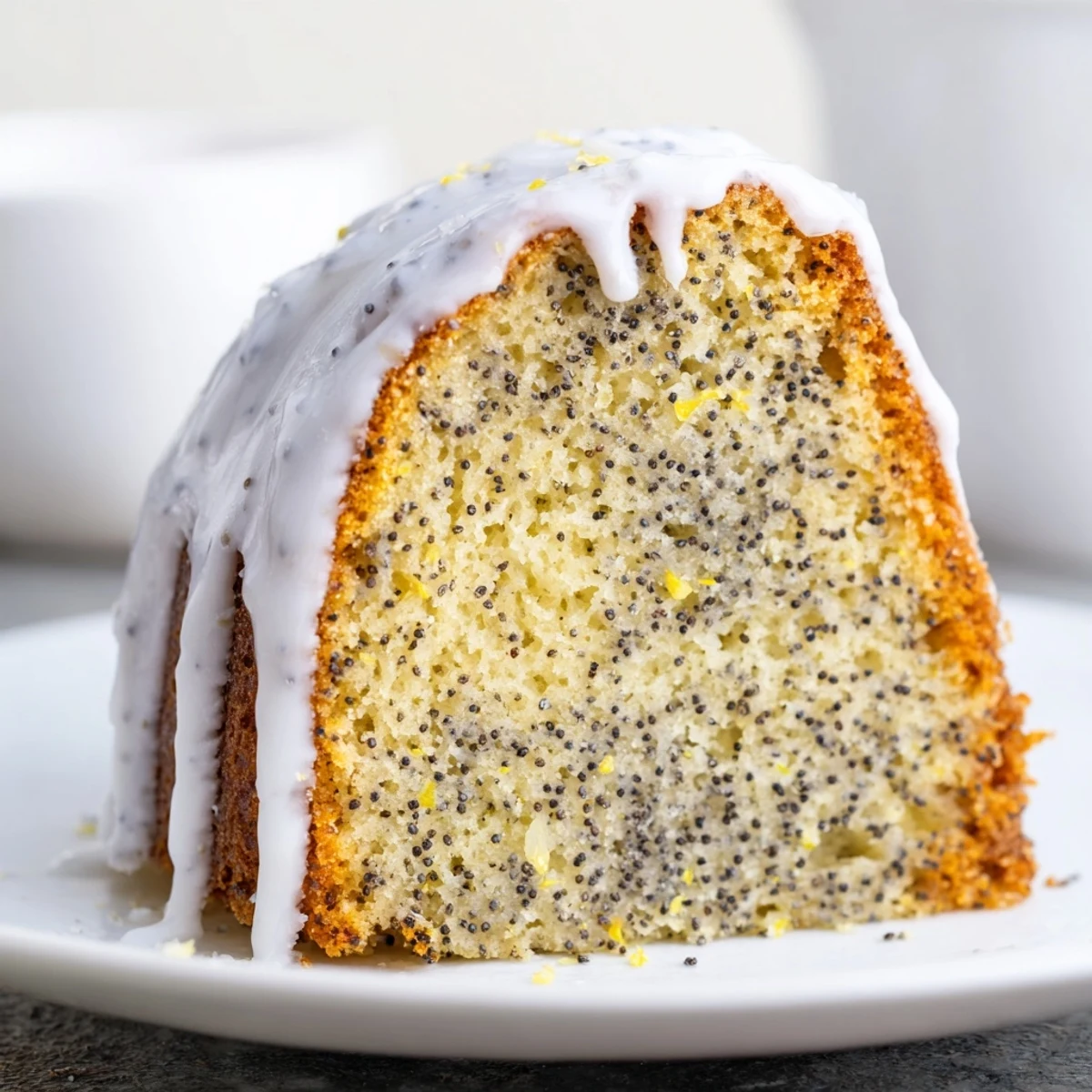
Save This recipe has become one of those kitchen stalwarts I return to again and again because it never lets me down. There's real joy in a cake this simple, this bright, and this genuinely delicious.
Common Questions
- → What pan is best for baking this Bundt cake?
-
A 10–12-cup Bundt pan works best to give the cake its characteristic ring shape and ensures even baking.
- → How do poppy seeds affect the texture?
-
Poppy seeds add a subtle crunch and a pleasant nutty texture that contrasts nicely with the tender crumb.
- → Can I substitute any ingredients for a lighter version?
-
Replacing half the butter with Greek yogurt creates a lighter texture without sacrificing moisture.
- → How should the lemon glaze be prepared?
-
Whisk powdered sugar with fresh lemon juice and lemon zest until smooth and pourable, then drizzle over cooled cake.
- → What is the best method to ensure the cake is fully baked?
-
Insert a skewer into the center; it should come out clean when the baking is complete.
- → Can this cake be stored for later use?
-
Keep the cake covered at room temperature for up to 3 days to maintain freshness.