
 Save
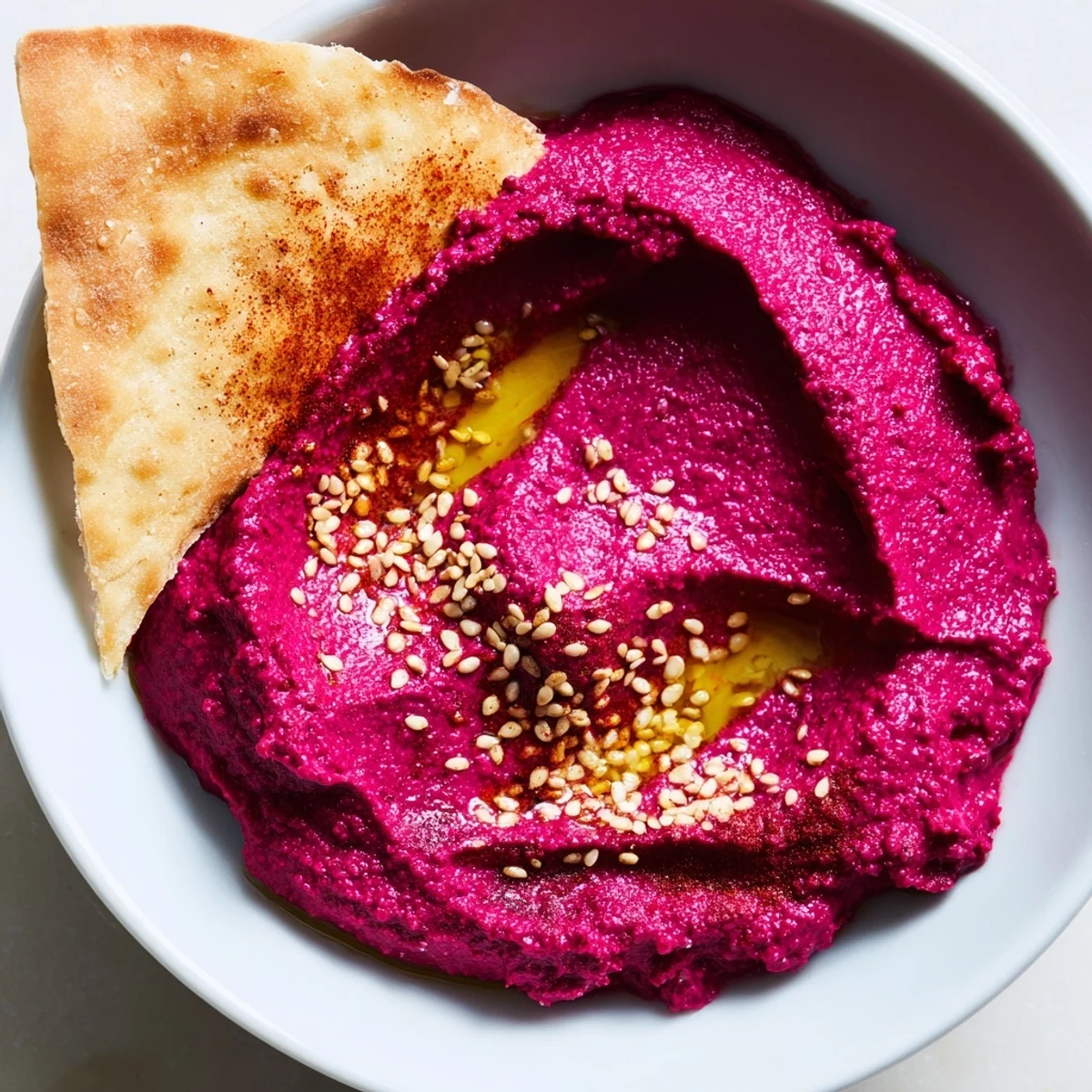
Save This dish features a creamy blend of sweet roasted beets and chickpeas, enhanced with tahini, lemon juice, and spices for richness. Golden pita chips are seasoned and baked until crisp, providing a perfect crunchy accompaniment. The hummus is smooth yet textured, ideal for dipping or spreading. Simple roasting and blending yield a colorful, flavorful appetizer or snack that suits vegan and gluten-free preferences when pita substitutes are used.
There was a farmers market morning when I picked up a bunch of beets so vibrant they seemed to glow under the spring sunlight, and a vendor casually mentioned roasting them with hummus would change everything. I was skeptical at first—hummus felt like a tried-and-true chickpea thing—but something about the way she said it made me curious enough to try.
I made this for a dinner party last summer when my neighbor mentioned she was tired of the same tired dips, and watching her face when she tasted it—that moment of surprise when something familiar becomes something new—that's when I knew this recipe was worth keeping close.
Ingredients
- 1 medium beet, trimmed and scrubbed: The star ingredient that gives this hummus its gorgeous pink-magenta color and a subtle sweetness that balances the tahini's richness.
- 1 can (15 oz) chickpeas, drained and rinsed: The protein base that makes this creamy and substantial—always rinse them to reduce the starchy liquid that can make hummus gluey.
- 3 tbsp tahini: Pure sesame paste that adds a nutty depth and keeps the texture silky, though don't skip the water at the end or it'll seize up on you.
- 2 tbsp fresh lemon juice: Brightness that cuts through the earthiness and keeps everything tasting alive rather than heavy.
- 1 small garlic clove, minced: Just enough to add complexity without overpowering—one clove is better than two in this delicate balance.
- 2 tbsp olive oil: Good quality here matters because it's a star player, not just a supporting ingredient.
- 1/2 tsp ground cumin: The spice that whispers rather than shouts, tying everything together with warmth.
- 1/2 tsp salt and 1/4 tsp black pepper: Season as you taste, because every blender and every batch of beets needs a slightly different hand.
- 2–3 tbsp cold water: The magic ingredient that transforms paste into velvet—add it slowly and watch the texture bloom.
- 3 pita breads: Use fresh ones if possible, as older pita won't crisp up the same way.
- 2 tbsp olive oil for chips, plus 1/2 tsp sea salt and optional smoked paprika: The paprika adds a subtle smokiness that nobody quite expects in something so simple.
Instructions
- Roast the beet until it's soft enough to break with a fork:
- Wrap your trimmed beet tightly in foil—this keeps the moisture in and prevents the oven from turning everything beet-colored—and place it directly on the oven rack at 400°F for forty to forty-five minutes. You'll know it's ready when a fork slides through with just the gentlest push.
- Prepare your pita chips while the beet finishes:
- Cut pita into triangles, toss with olive oil and salt, spread them out in a single layer so they're not crowded, and bake at 375°F for ten to twelve minutes, stirring halfway through. Watch them on that second half because the line between golden and burnt is shorter than you think.
- Cool the beet and peel away the skin:
- Let it rest until you can handle it, then the skin should slip off easily—if it doesn't, you can run it under cool water and rub it away with your fingers. Chop it into rough chunks.
- Blend everything into creamy submission:
- In your food processor, combine the beet, chickpeas, tahini, lemon juice, garlic, olive oil, cumin, salt, and pepper, and pulse until it comes together. Then, with the machine still running, add your water one tablespoon at a time until you hit that perfect spreadable consistency that's somewhere between dip and sauce.
- Taste, adjust, and serve with intention:
- Transfer to a bowl, drizzle with extra olive oil so it looks as good as it tastes, and set the pita chips alongside. If it feels like something's missing, a pinch more lemon juice usually solves it.
 Save
Save I remember serving this at a potluck where someone's four-year-old asked for seconds on hummus—seconds—which her mother swore had never happened before in the child's entire life. That's when I realized food doesn't have to be complicated to feel special; sometimes it just needs to taste like someone cared.
The Magic of Color
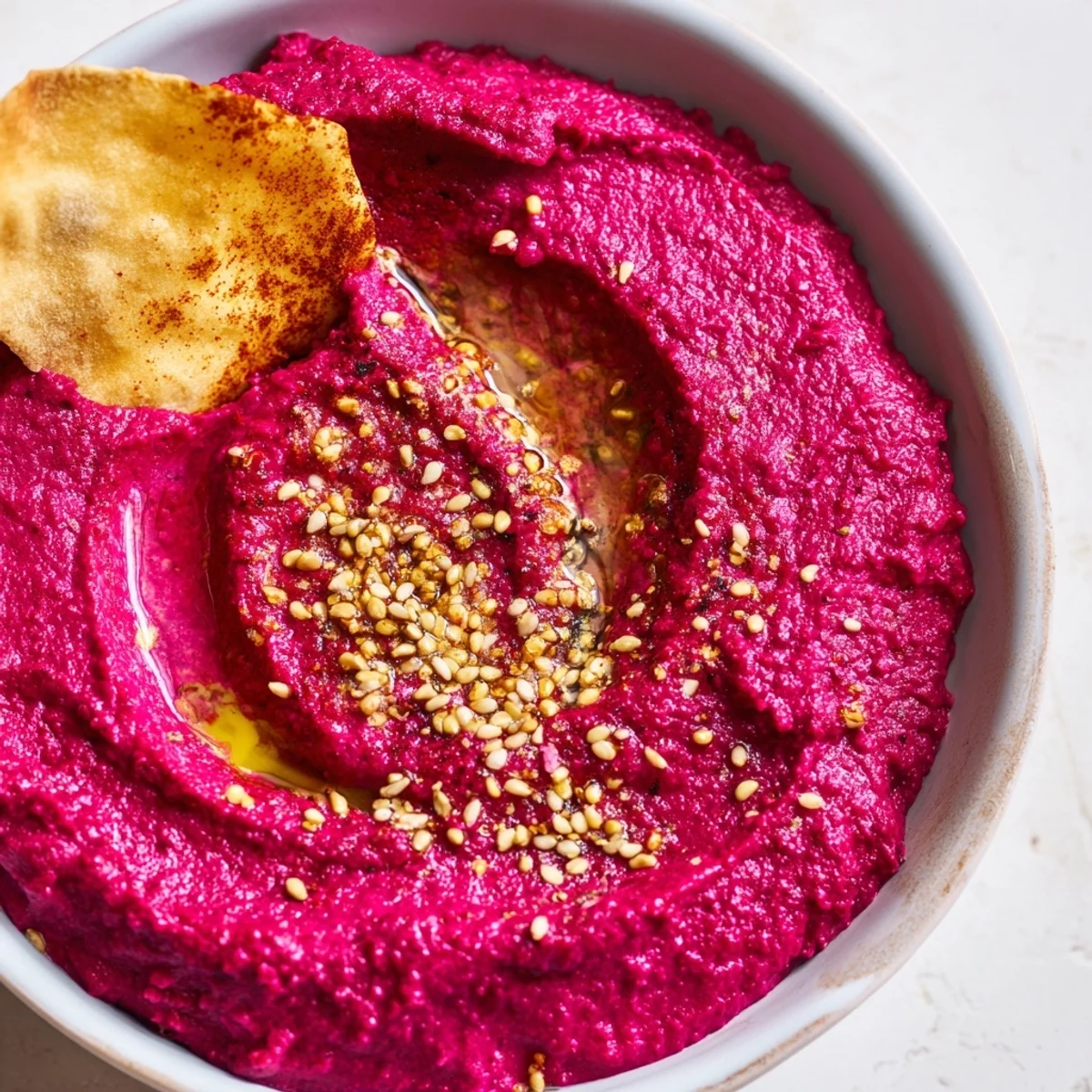
There's something about the moment when you blend beets into creamy chickpea paste and watch it transform from pale beige to this almost impossible magenta that makes cooking feel like alchemy. The color isn't just beautiful—it's a visual promise that something unexpected is about to happen in your mouth, and it delivers every time.
Making Pita Chips That Actually Stay Crisp
The secret nobody tells you is that humidity is your enemy once those chips cool down, so if you're making them ahead, store them in an airtight container with a paper towel that you swap out once if it gets damp. A breeze from an open window during cooling helps too—something about letting them dry out completely while they're still warm makes all the difference.
Serving and Storing
This hummus keeps for five days in the refrigerator, tightly covered, though it tastes best within the first three days when the flavors are brightest. The pita chips are best eaten fresh, but if they soften, pop them back in a 300°F oven for five minutes to revive their crispness.
- Make the hummus a few hours ahead if you're entertaining, which gives the flavors time to settle and mellow.
- Keep the pita chips in a separate container so they don't get soggy from the hummus's olive oil drizzle.
- If you're serving to someone with sesame allergies, tahini is non-negotiable here, so offer something else instead of trying to work around it.
 Save
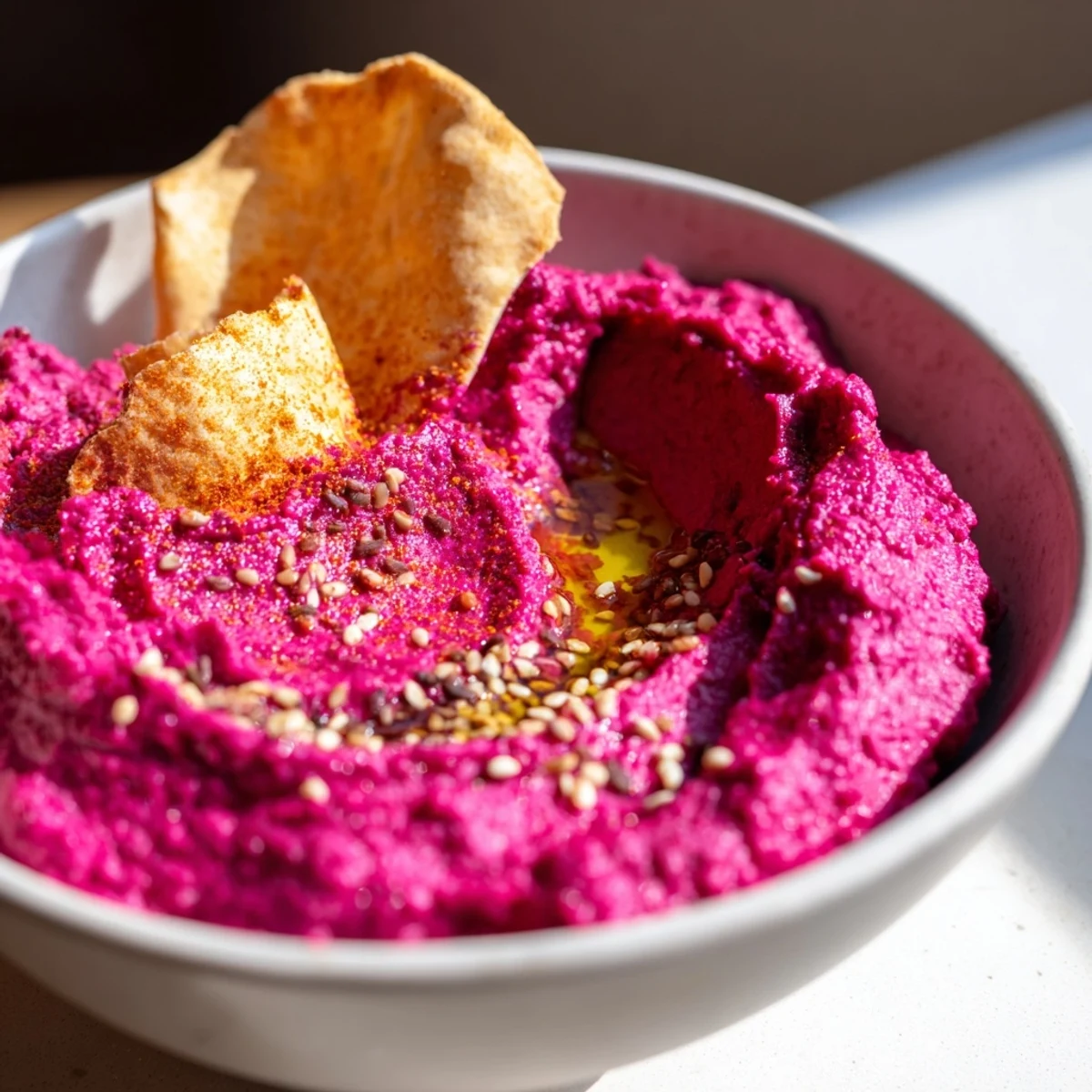
Save This recipe became the thing I make when I want to remind myself why I love cooking in the first place: because something simple, made with attention and care, has the power to change someone's evening. Serve it to people you actually like and watch what happens.
Common Questions
- → How do I roast beets perfectly for this dip?
-
Wrap the beet in foil and roast at 400°F (200°C) for 40–45 minutes until fork tender. Let it cool before peeling and chopping.
- → Can I make the pita chips crispy without frying?
-
Yes, tossing pita triangles with olive oil, salt, and smoked paprika then baking them at 375°F (190°C) for 10–12 minutes results in crispy chips.
- → What gives the dip its creamy texture?
-
Tahini combined with chickpeas, olive oil, and additional water creates a smooth, creamy consistency when blended together.
- → How can I adjust the flavor to be less tangy?
-
Reduce the amount of lemon juice or balance with a small pinch of salt and spices to mellow the tanginess.
- → Are there suitable substitutions for pita chips?
-
Gluten-free pita works well or vegetable crudités like carrots and cucumbers can be served for a fresh contrast.