
 Save
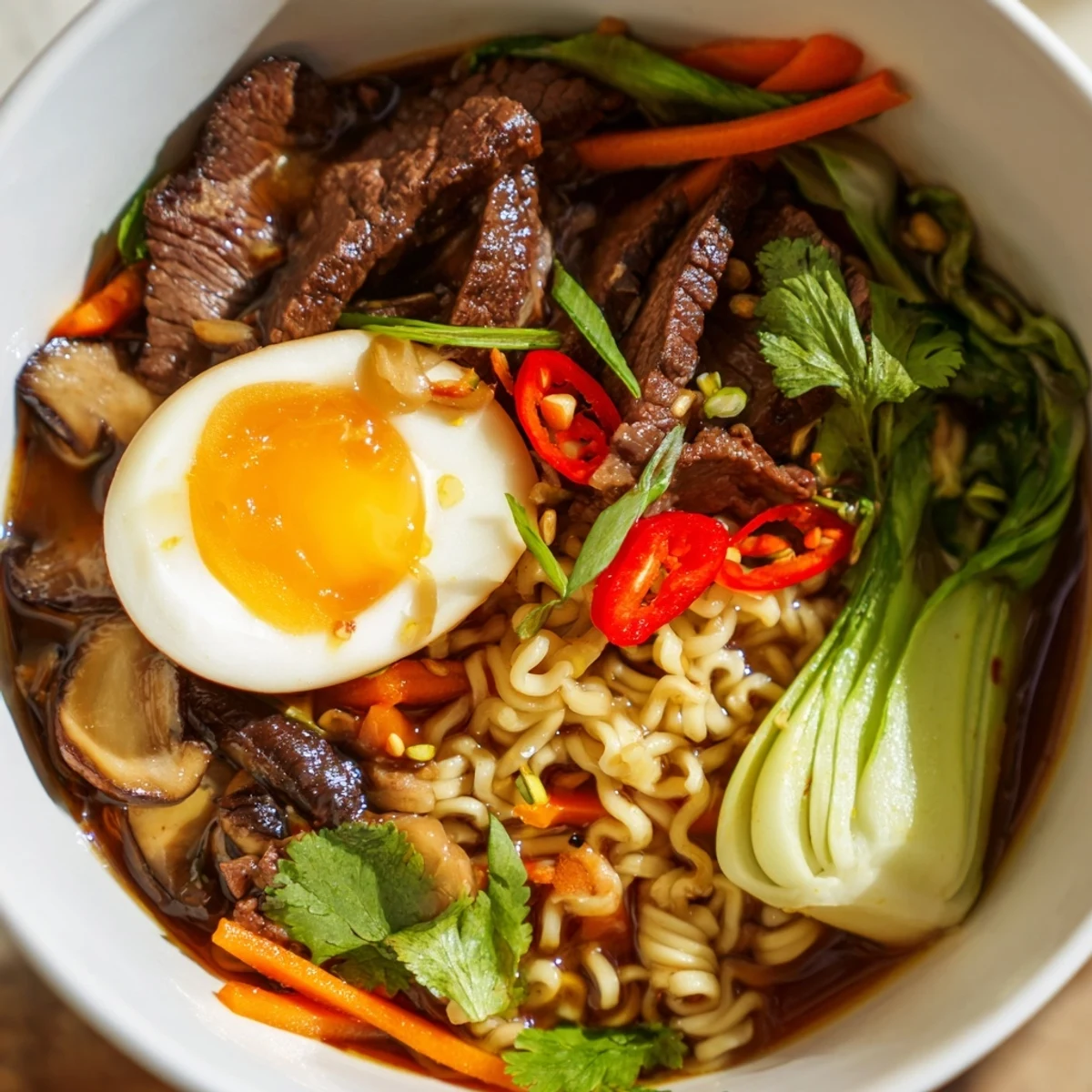
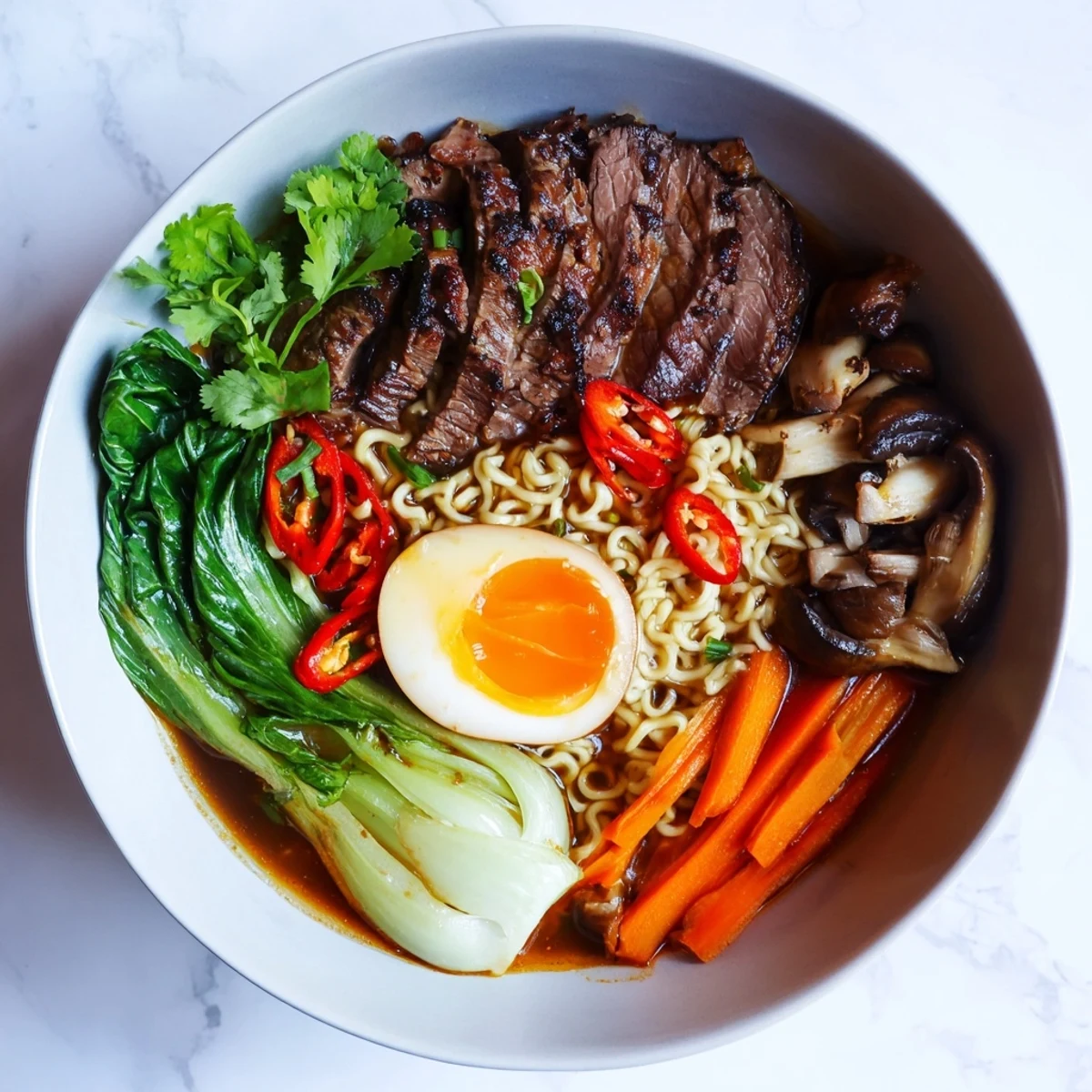
Save This dish features tender flank steak marinated and quickly seared, served atop chewy ramen noodles in a rich, spicy broth. The broth blends garlic, ginger, miso, chili paste, and soy, simmered with vegetables like shiitake mushrooms, bok choy, and carrots. Soft-boiled eggs add creaminess as finishing touches include spring onions, sesame seeds, fresh chili slices, and coriander. The harmonious layers balance heat and umami for a warming, satisfying meal perfect for any day.
There's something about the smell of ginger and chili paste hitting hot oil that makes me stop whatever I'm doing. Years ago, a Japanese colleague brought leftover ramen to our office, and watching her eat it with such quiet contentment made me curious enough to finally learn how to make it myself. That first bowl I made was too salty and somehow both watery and heavy, but something about the ritual of softening the eggs, tending to the broth, and arranging toppings like edible art hooked me completely. Now this spicy beef ramen is the dish I turn to when I want to feel like I'm taking care of myself.
I made this for my partner on a cold Tuesday when they'd had a terrible day, and I watched the tension in their shoulders melt with the first sip of broth. They asked for seconds without even finishing the first bowl, which doesn't happen often. It became our default sick-day meal, our late-night craving solution, and honestly, the thing I've made more times than any other recipe.
Ingredients
- Flank steak, thinly sliced: The key is slicing against the grain, which makes the beef tender even with just a quick sear; ask your butcher to do this if you have a chance.
- Soy sauce: Use low-sodium here because you're building layers of umami and don't want the broth to overshadow the other flavors.
- Sesame oil: Just a teaspoon in the marinade gives the beef a subtle nuttiness that makes people ask what that flavor is.
- Gochujang or sambal oelek: This is your heat and your depth; don't be shy with it, and stir it in early so it blooms in the hot oil.
- Miso paste: White or red both work, but white gives a gentler, sweeter undertone that balances the spice nicely.
- Fresh ramen noodles: If you can find them, they cook in 2-3 minutes and have a silkier texture than dried; dried works fine too, just follow the package timing.
- Soft-boiled eggs: Exactly 6 minutes of boiling gives you that jammy, runny yolk that everyone wants but rarely gets right.
- Shiitake mushrooms: Their earthy umami deepens the broth; cremini or oyster mushrooms work in a pinch, but shiitake is worth seeking out.
- Bok choy: It stays tender but not mushy if you add it near the end, and it catches the broth beautifully on each leaf.
- Spring onions and coriander: These fresh garnishes cut through the richness and make each spoonful feel bright.
Instructions
- Marinate the beef while you prep:
- Toss your thin beef slices with soy sauce, sesame oil, cornstarch, and pepper in a bowl. The cornstarch creates a silky coating when it hits the heat, and 10 minutes is enough time for the flavors to start clinging to the meat.
- Cook eggs to that magical soft-boiled state:
- Boiling water, eggs in, exactly 6 minutes on the clock, then straight into ice water to stop the cooking. The ice bath is crucial because it keeps the yolk from cooking further and gives you that runny center you're after.
- Build the broth foundation:
- Heat oil in a large pot and soften onions until they're translucent and sweet, about 2 minutes. Add garlic and ginger, and let them toast for just a minute so they lose their raw edge but don't burn.
- Add the flavor anchors:
- Stir in your chili paste and mushrooms, letting them cook for 2 minutes so the mushrooms release their moisture and the paste blooms in the heat. Then add soy sauce, miso, mirin, and rice vinegar all at once, stirring until the miso dissolves completely.
- Simmer the broth to meld flavors:
- Pour in beef broth and water, then bring everything to a gentle simmer where just a few bubbles break the surface. This is where the magic happens, as all those layers of umami, spice, acid, and sweetness start to become one cohesive thing.
- Sear the beef quickly and confidently:
- Get a skillet screaming hot, then add your marinated beef in a single layer and leave it alone for just a minute on each side. You want the outside golden and the inside still rosy pink, which is why those thin slices are essential.
- Finish the broth with vegetables:
- Add carrots and bok choy to the simmering broth with 3-4 minutes to go before serving. They should still have a tiny bit of resistance when you bite them, not soft all the way through.
- Cook noodles separately and assemble with care:
- Follow your noodle package instructions, drain them, and divide among bowls so they don't get waterlogged before the broth hits. Then ladle hot broth and vegetables over top, and arrange the beef slices, egg halves, and garnishes like you're plating something precious.
 Save
Save There's a moment right before I pour the broth over the noodles when the kitchen smells so good that I stand there for a second just breathing it in. That's when I know this bowl is going to be exactly what I needed, or what someone I care about needed, and honestly that feeling is what keeps me making it.
The Art of the Soft-Boiled Egg
The soft-boiled egg is the soul of this bowl, and it deserves its own moment. I learned this by making exactly five bad batches before understanding that the ice water isn't optional—it's what stops the cooking process and gives you that runny yolk. Some people get precious about using room-temperature eggs or starting them in cold water, but I've found the boiling water method more reliable; you get a more consistent result when you know exactly how long they've been in the heat.
Customizing Your Heat Level
This recipe builds heat slowly and steadily, but your tolerance and preferences matter. If you love spice, add extra chili paste directly to your bowl, or serve chili oil on the side so people can control their own experience. If you're cooking for mixed heat preferences, dial back the gochujang and let the fresh chili slices be optional—this way the broth stays complex and flavorful for everyone, and spice lovers can go wild.
Variations That Work
I've made this with chicken breast pounded thin, with pork shoulder that I seared instead of beef, and even with extra-firm tofu pressed and cooked the same way. The broth is so flavorful that it carries whatever protein you choose. I've also added a handful of spinach in the last minute, or swapped the bok choy for baby broccoli, and it only makes the bowl more interesting. The structure stays the same; only the details change.
- Try a splash of mirin or a pinch of sugar if your broth tastes too spicy and not round enough.
- If you make this ahead, keep the broth and toppings separate, then heat and assemble when you're ready to eat.
- Fresh ramen noodles are a game-changer if you can find them, but dried ones absolutely work and keep for months in your pantry.
 Save
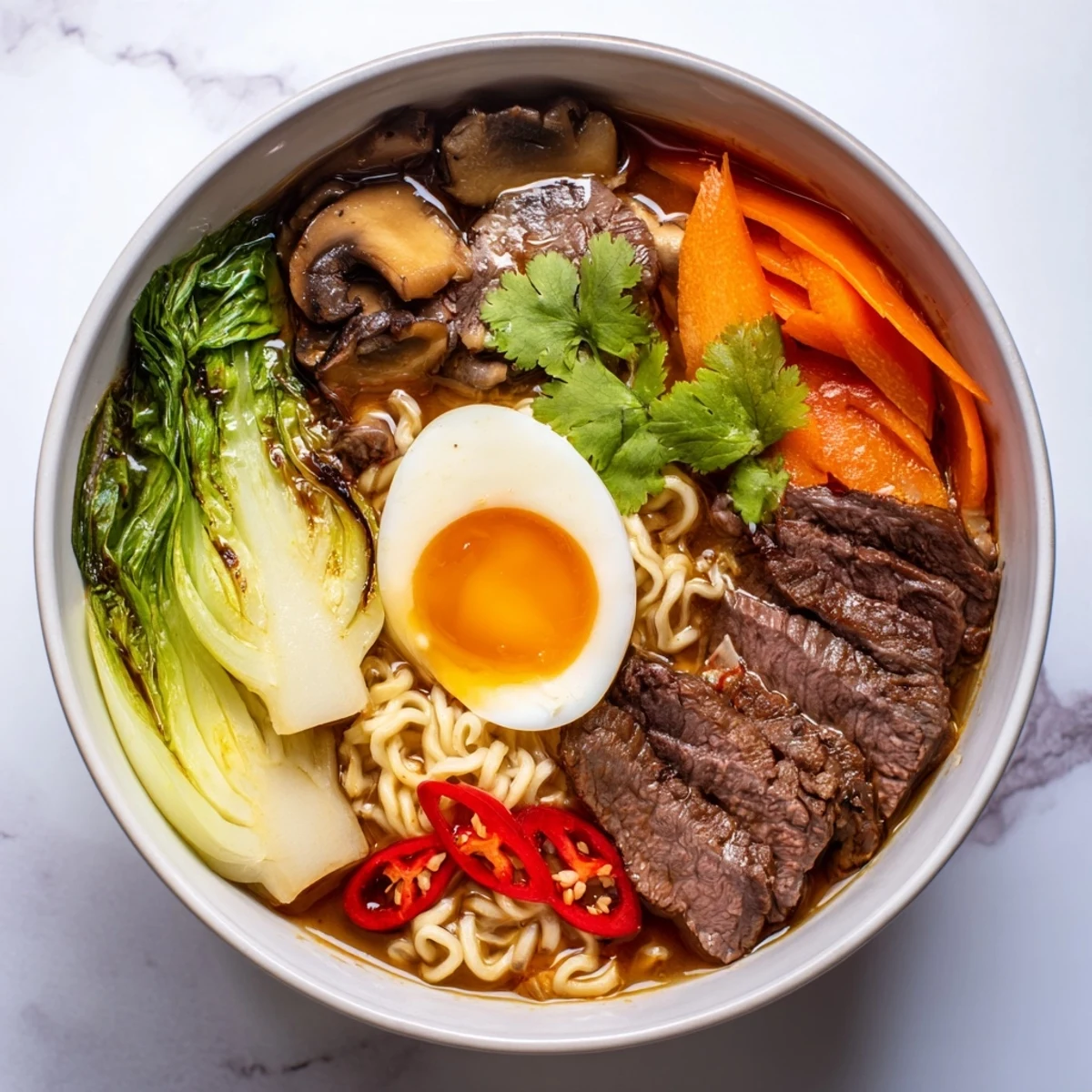
Save This ramen has become my answer to so many kitchen moments: when I want to feel competent, when someone I love needs feeding, when I crave something that tastes both indulgent and nourishing. Make it tonight.
Common Questions
- → How do I get the beef tender and flavorful?
-
Marinate thin flank steak slices with soy sauce, sesame oil, cornstarch, and pepper to tenderize and enhance flavor before quick searing.
- → What’s the best way to cook soft-boiled eggs?
-
Boil eggs gently for 6 minutes, then cool rapidly in ice water for easy peeling and creamy yolks.
- → How to make the broth rich and spicy?
-
Combine chili paste, miso, soy sauce, ginger, garlic, and mirin, simmering with beef broth and vegetables for depth and heat.
- → Can I substitute the noodles?
-
Fresh or dried ramen noodles work well; cook according to package instructions to maintain their chewy texture.
- → What garnishes enhance the dish best?
-
Fresh spring onions, toasted sesame seeds, sliced chili, and coriander add brightness and texture contrasts.